BuffaloWildWings

  • Subscribe to our RSS feed.
  • Twitter
  • StumbleUpon
  • Reddit
  • Facebook
  • Digg

Wednesday, October 17, 2012

Cities and Inner Life

Posted on 7:04 AM by Unknown
[Young's work involves performative walking.]
A few weeks ago, I found myself at an all-day retreat meeting in downtown St Paul to discuss the city’s forthcoming Complete Streets Manual. It was early in the morning, the room was full, and everyone was drinking coffee. We began the meeting by going around the room introducing ourselves. Each person in attendance stood up and described who we were, and what our interests were.

As it turned out, I found myself sitting next to Marcus Young, the official artist-in-residence for the city of St Paul. I've long been a fan of Young's work, and consider him one our keenest thinkers about the connection between cities and art. Marcus was the brains behind St Paul’s inexpensive and innovative sidewalk poetry program, and his other work involves things like performative walking and public art. At any rate, Marcus stood up, introduced himself as the city’s artist-in-residence, and said he was interested in “the intersection of environment, behavior, and inner life.”

Maybe I was too sleepy, but I thought little of it at the time. We went on through the meeting, which lasted pretty much all day and involved a lot of brainstorming about things like the MUTCD (eeek) and different kinds of design manuals. By 5:00, everybody was both encouraged about, and weary of, urban design.

Later that day, when I was chatting with Young about the meeting, he asked me a question. During the meeting, one of the moderators had made a reference to Young’s stated  interests.  Curiously, when described them, he removed the term “inner life” from list. He said something like, “I too am very interested in the relationship between environment and behavior.” “Why,” Marcus asked me later, “was nobody interested in having a discussion about inner life?"


Planning's Determinist Legacy

[For reformers like Riis, slums bred vice.]
Young’s question got me thinking about urban professions. Planners, architects, and designers are generally agnostic about inner life. They have almost nothing to say about how spaces affect our emotional well being. Meanwhile, artists like Young are eager to link space and the self. They believe that how we move about the city, and what kind of space we inhabit, has a profound effect. Whether we walk or drive, and what kind of homes we have, changes our ability to think about the world. Consider the connection between walking and thinking, between getting lost in thought and wandering the city.  Consider the connections between contemplation and public space. (Rebecca Solinit’s two books about walking make for an encyclopedic guide to this relationship.) In short, our physical spaces provide us with mental space. Our streets deeply affect how we understand ourselves, and how we relate to each other as a society. Environment, behavior, and inner life become almost inseparable.

For architects, planners, and urban designers, however, the connection between inner life and environment is nowhere to be found. Today, these disciplines have nothing to say about how spaces affect our thoughts. There are lots of reasons for this curious omission, mostly having to do with politics, power, and the long history of connecting space to morality. For example, the early history of US city planning traces its roots back to the urban reform movement in late 19th century cities. At that time, huge teeming slums were synonymous with immigrants. Page through a book like Jacob Riis’s How the Other Half Lives, and you quickly see that there was little distinction made between substandard housing and crime LINK. At that time, the connection between environment and inner life was quite clear: slums bred immorality. The way to reform the city was to build better buildings, to inspire dirty and densely packed immigrants to embrace temperance and respect for the state through classical architecture, grand boulevards, and bucolic Olmsted-ian parks.
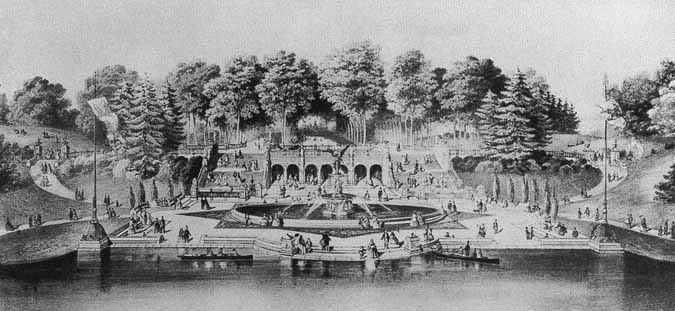
[Olmsted's Central Park was a moral project, as much as anything else.]
Over time, planning and architecture gradually left this kind of spatial determinism behind, turning to a more modernist ideal of space. Assumptions connecting environment and thoughts meant privileging certain (White, male, bourgeois) cultures over others. These attitudes were unabashedly racist and sexist, and reading them today is an exercise in atonement.  Instead, urban professions adopted the theoretical concept of the autonomous individual, the idea that human beings have an essential inner self that remains the same regardless of environment. In other words, we are always essentially the same person, no matter where we live. We have the same values and thoughts, no matter how the city is designed. Space doesn’t matter.

Today, planners and architects almost insist on this principle, refusing to suggest any link between environmental design and inner life. Linking them would be condemned as “social engineering,” probably the cardinal sin of planning. This insistence on the abstract external world mans that architecture might be considered beautiful, but it’s not inspiring. Cities might be liveable, but they’re not spiritual. Motivations for good urban design must always be described using abstract measures and external reasoning. Anytime designers cross this invisible barrier between outer world and inner self, they become visibly uncomfortable.
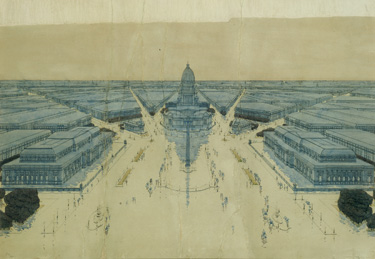
[Unlike Burnham's Chicago, planners and architects no longer explicitly conect cities to inner life.]

Inner Space: The Final Frontier


This attitude is unfortunate. Of course there's a connection between environment and inner life. Our spaces make us who we are. By insisting on abstract concepts devoid of feeling, cities are lose some of their most compelling justifications. There is something very important about walking that isn’t just about exercise or environmentalism. Walking is much more than that. It allows people space for contemplation, opportunity to experience the wind and the sun and the stars. There is something crucial about living amidst other people in a community, about having public spaces that bring represent our shared future. My point here is that inner life is a key element often missing from conversations about urban design, because of the desire to avoid political or deterministic assumptions.

It would be nice if there was some way to talk about the connection between environment and inner life without turning into a 20th century moralist. Words and concepts like “place,” “community,” and “quality of life” can point toward the conversation, but don’t really get us there. Maybe this is a role for artists. How do we begin to talk about how spaces make us feel, and why this is important? I don’t know, but stamping poetry into the sidewalk is probably a good start.

[Tonight in the dark kitchen only the stainless steel sink holds the moon.]
Email ThisBlogThis!Share to XShare to FacebookShare to Pinterest
Posted in art, cities, environment, everyday life, god, sidewalks | No comments
Newer Post Older Post Home

0 comments:

Post a Comment

Subscribe to: Post Comments (Atom)

Popular Posts

  • *** Sidewalk Weekend! ***
    Sidewalk Rating: Pit-stained You pass by six-storied houses, in which sixty or seventy families harbor, and swelter in the boundless contig...
  • Six Things Rapidly Becoming Obsolete
    Lost in the automobile buzz over robo-cars is the debate over Tesla Motors ' attempts to sell cars over the internet. To me, Tesla, whic...
  • Reading the Highland Villager #78
    [Basically the problem is that the best source of Saint Paul streets & sidewalks news is the Highland Villager, a very fine and historic...
  • TCSidewalks Live: Bike the New Brewpubs of Minneapolis Tonight
    [Some bearded dude (typical) on the Harriet  taproom patio, which is in a great alley!.] I'm going to be co-hosting a ride to five brew...
  • Nine Ways the US Democratic System Screws its Cities
    No, I'm not talking about the usual anti-urban Federal subsidies. I'm not mentioning pro-sprawl policies like the US interstate high...
  • *** Sidewalk Weekend! ***
    Sidewalk Rating: Timeless --> Then usual drive home: zone of used car dealerships, zone of quarry, long stretch of highway looking ...
  • Ignorant Thoughts on Bicycling in Boston
    [One-way "No Bikes" street near Harvard Square.] OK, first of all, I have never ridden a bicycle in Boston. That said, I was just ...
  • Classic Sidewalks of the Silver Screen #81
    Alvy breaks up with Annie... ... in Woody Allen's (1977) romance, Annie Hall .
  • Sidewalk of the Week: 34th Avenue South
    The other day I happened across the holy grail of sidewalk wandering: the perfect corner. Some friends had called a meeting at a local dive ...
  • Cities and Inner Life
    [Young's work involves performative walking.] A few weeks ago, I found myself at an all-day retreat meeting in downtown St Paul to discu...

Categories

  • #WARONCARS (3)
  • aesthetics (4)
  • affordable housing (1)
  • alleys (3)
  • animals (5)
  • announcement (9)
  • architecture (3)
  • archives (1)
  • art (11)
  • baseball (1)
  • beer (8)
  • bicycle freedom week (3)
  • bike parking (4)
  • bikes (27)
  • birds (1)
  • blogging (3)
  • Boston (11)
  • bureaucracy (2)
  • BURP (2)
  • capitalism (3)
  • cars (9)
  • Chicago (9)
  • cities (13)
  • cities on the move (1)
  • classic sidewalks of the silver screen (21)
  • Climate Change (2)
  • cobblers (1)
  • conspiracy (3)
  • crime (2)
  • crowds (3)
  • Death (15)
  • democracy (3)
  • denny hecker's abandoned car lots (1)
  • density (6)
  • detroit (1)
  • diversity (4)
  • dives (1)
  • doorways (3)
  • downtown (7)
  • duluth (2)
  • economics (3)
  • edina (3)
  • environment (1)
  • everyday life (4)
  • falcon heights (1)
  • feedback (1)
  • florida (2)
  • food (4)
  • freedom (4)
  • gentrification (1)
  • geography (1)
  • god (2)
  • guns (1)
  • halloween (3)
  • hastings (2)
  • hennepin county (3)
  • historic preservation (4)
  • hopkins (1)
  • India (1)
  • industry (1)
  • infrastructure (3)
  • internets (1)
  • Jane Jacobs (1)
  • kids (3)
  • LA (9)
  • London (2)
  • love (1)
  • LRT (2)
  • mark dayton (2)
  • message boards (3)
  • Met Council (2)
  • metaphors (1)
  • milwaukee (1)
  • Minnesota (9)
  • modernism (2)
  • Mpls (93)
  • MPR Decoder (1)
  • music (1)
  • name that sidewalk (4)
  • nature (3)
  • neon signs (4)
  • newsflash (33)
  • NIMBY (9)
  • nostalgia (1)
  • NYC (6)
  • old people (3)
  • parades (2)
  • paris (1)
  • parking lots (6)
  • parking meters (3)
  • parks (1)
  • patios (1)
  • Philadelphia (7)
  • pittsburgh (1)
  • placemaking (2)
  • planning (12)
  • plazas (2)
  • politics (13)
  • pontification (5)
  • poor people (1)
  • portland (2)
  • postmodernism (1)
  • pothole pawlenty (3)
  • prognostication (2)
  • public health (1)
  • public policy (10)
  • public space (2)
  • public works (2)
  • pumpkins (1)
  • race (1)
  • ramsey county (1)
  • reading the highland villager (31)
  • real estate (1)
  • real world planning experiments (2)
  • retail (1)
  • rhode island (1)
  • richfield (1)
  • rivers (2)
  • safety (11)
  • San Francisco (2)
  • schadenfreude (2)
  • science (1)
  • seattle (1)
  • semiotics (3)
  • shop windows (5)
  • sidewalk closed signs (1)
  • sidewalk flotsam (1)
  • sidewalk games (13)
  • sidewalk of the week (10)
  • sidewalk poetry (18)
  • sidewalk vendors (1)
  • sidewalks (5)
  • sidewalks at night (1)
  • Sidewalks of Target Field (1)
  • signs of the times (24)
  • silly (2)
  • skyways (4)
  • snark (2)
  • soapboxes (1)
  • social capital (2)
  • southern MN (1)
  • stillwater (3)
  • stpaul (98)
  • street musicians (5)
  • streetcars (2)
  • streets.mn (19)
  • suburbs (3)
  • subways (1)
  • tcs interviews (2)
  • TCSidewalks Live (4)
  • the media (8)
  • the Midwest (1)
  • the South (1)
  • traffic (3)
  • traffic calming (2)
  • trains (2)
  • transit (5)
  • Transportation (3)
  • trees (1)
  • U of MN (6)
  • UK (1)
  • upstate NY (1)
  • USA (3)
  • walkability (6)
  • Washington DC (1)
  • weather (6)
  • Wisconsin (5)
  • woodbury (1)
  • worst planning contest (1)
  • zombies (2)

Blog Archive

  • ►  2013 (176)
    • ►  September (11)
    • ►  August (21)
    • ►  July (19)
    • ►  June (17)
    • ►  May (24)
    • ►  April (21)
    • ►  March (13)
    • ►  February (25)
    • ►  January (25)
  • ▼  2012 (124)
    • ►  December (14)
    • ►  November (12)
    • ▼  October (25)
      • Halloween: The Night where Urban Boundaries Fade
      • Twin City Pumpkins #2
      • Sidewalk Game #11: Gum Galaxy
      • Reading the Highland Villager #70
      • A Vote for the Voter ID Amendment is a Vote Agains...
      • BURP #6 (Halloween Edition) This Tuesday at Clubho...
      • Classic Sidewalks of the Silver Screen #89
      • Classic Sidewalks of the Silver Screen #88
      • Today on Streets.mn: The First Rule of Urban Desig...
      • Real World Urban Design Experiment #1: Franklin Av...
      • *** Sidewalk Weekend ***
      • Signs of the Times #62
      • Sidewalk Dogs #7
      • Cities and Inner Life
      • Reading the Highland Villager #69
      • Why You Should Embrace the Impending Zombie Pub Cr...
      • Classic Sidewalks of the Silver Screen #87
      • 7 Year Blogaversary Post
      • Twin City Shop Windows #4
      • Signs of the Times #61
      • *** Sidewalk Weekend! ***
      • This post declared to be #9th Worst City Ranking o...
      • Sidewalk of the Week: Somewhere near Queens Drive
      • Sidewalk Poetry #29
      • Sidewalk Poetry #28
    • ►  September (26)
    • ►  August (27)
    • ►  July (20)
Powered by Blogger.

About Me

Unknown
View my complete profile